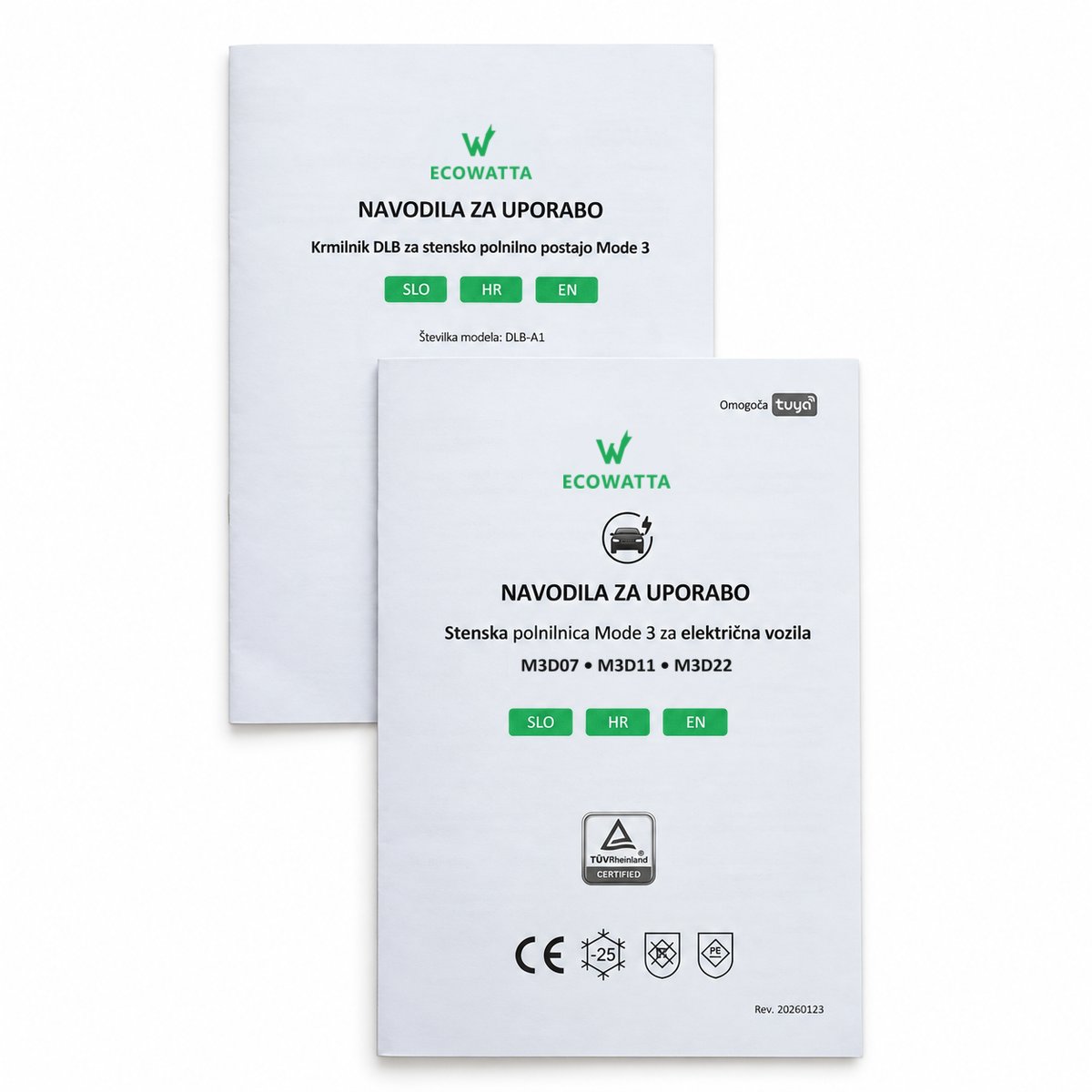
Description
Charge when electricity is cheapest
The M3D11 charger does not just charge “on–off”. In the app you enter your hourly electricity prices, then define when and how hard the charger should charge. Plug the car in in the evening and charging starts by itself at the hour you have chosen.
1. Tariff plan — you enter your prices
- Set a price level for every hour of the day: highest, medium, low and lowest.
- Set weekdays and the weekend separately.
- Prepare several profiles and name them as you like; switch between them with a single tap.
- From this the app colours a 24-hour timeline and calculates the cost and saving of every charging session.
2. Smart schedule — when and at what power
- A weekly charging schedule made of time windows placed in the cheapest hours of your tariff plan.
- Set the charging current for each time window — charge at full power in one block and at reduced power in another.
- Set the charging mode to “Scheduled” and the charger charges automatically according to the schedule whenever you plug the car in.
Slovenian time blocks
Since 1 October 2024, network charges in Slovenia have been billed in five time blocks and two seasons: the higher season runs from November to February, the lower from March to October. Three blocks occur in a single day. Network charges depend largely on the power you draw in each block, not only on the kWh consumed (source: Elektro Ljubljana, New tariff system).
That is why both settings matter: when you charge (windows in the cheaper blocks) and at what power (a lower current in the more expensive block so you do not exceed your agreed power). Tip: prepare one profile for the higher season and another for the lower season. Check the block schedule with your distribution operator (Moj elektro).
Four charging modes
| Immediate | charges straight away at the set current |
|---|---|
| Delayed | charging starts after the selected time |
| Scheduled | charges according to the smart schedule and tariff plan |
| Solar | coming soon |
Without a phone: use button C on the charger to set a delayed start in 30-minute steps, up to 8 hours. Use or the charger's schedule or the schedule in the car, not both at once.
Cost and saving in one place
- Live charging: power (kW), current (A), voltage (V), energy (kWh), duration, cost and saving; Start / Pause button.
- Statistics: monthly charts of costs, savings and consumption; history of every charging session; CSV export.
- Sharing access with family members, software updates via the app.
- Diagnostics: live voltage and current per phase, earthing status and temperature — useful when talking to your electrician.
Display and buttons
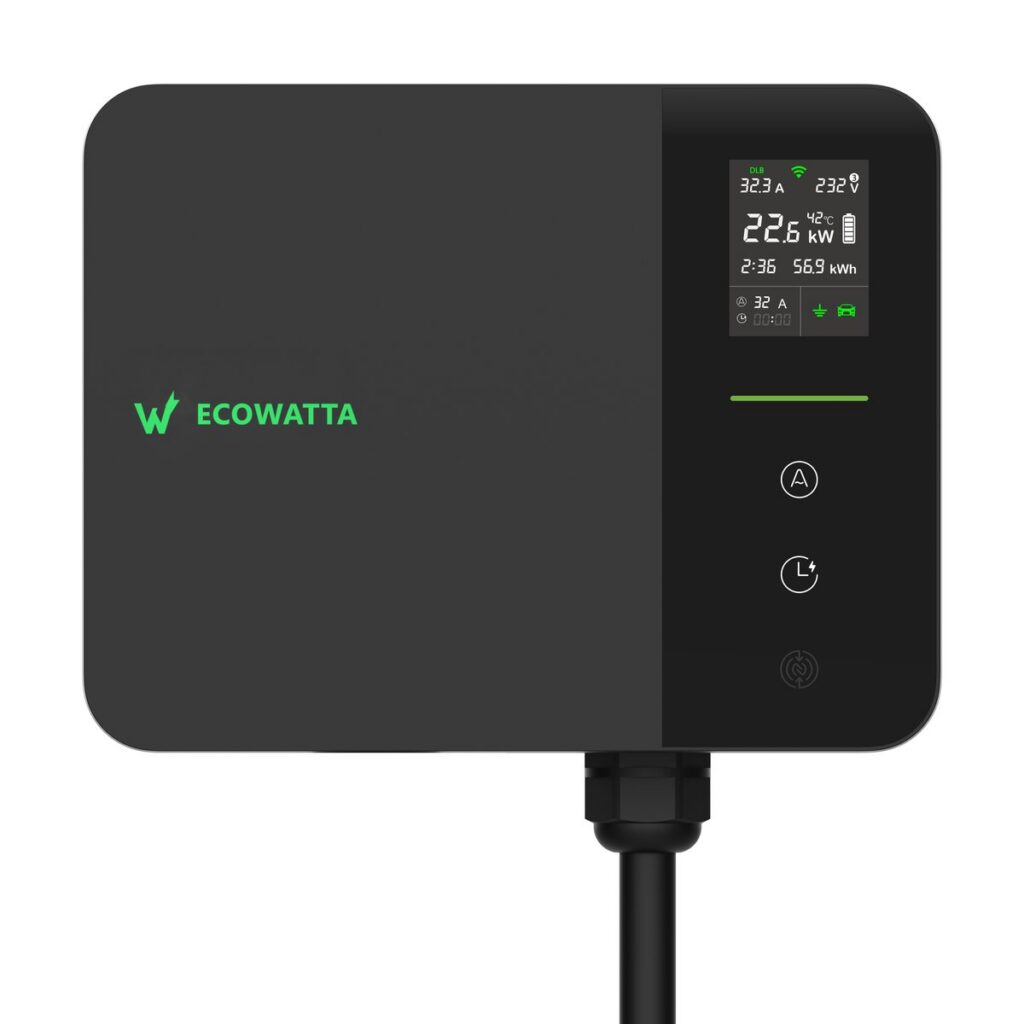
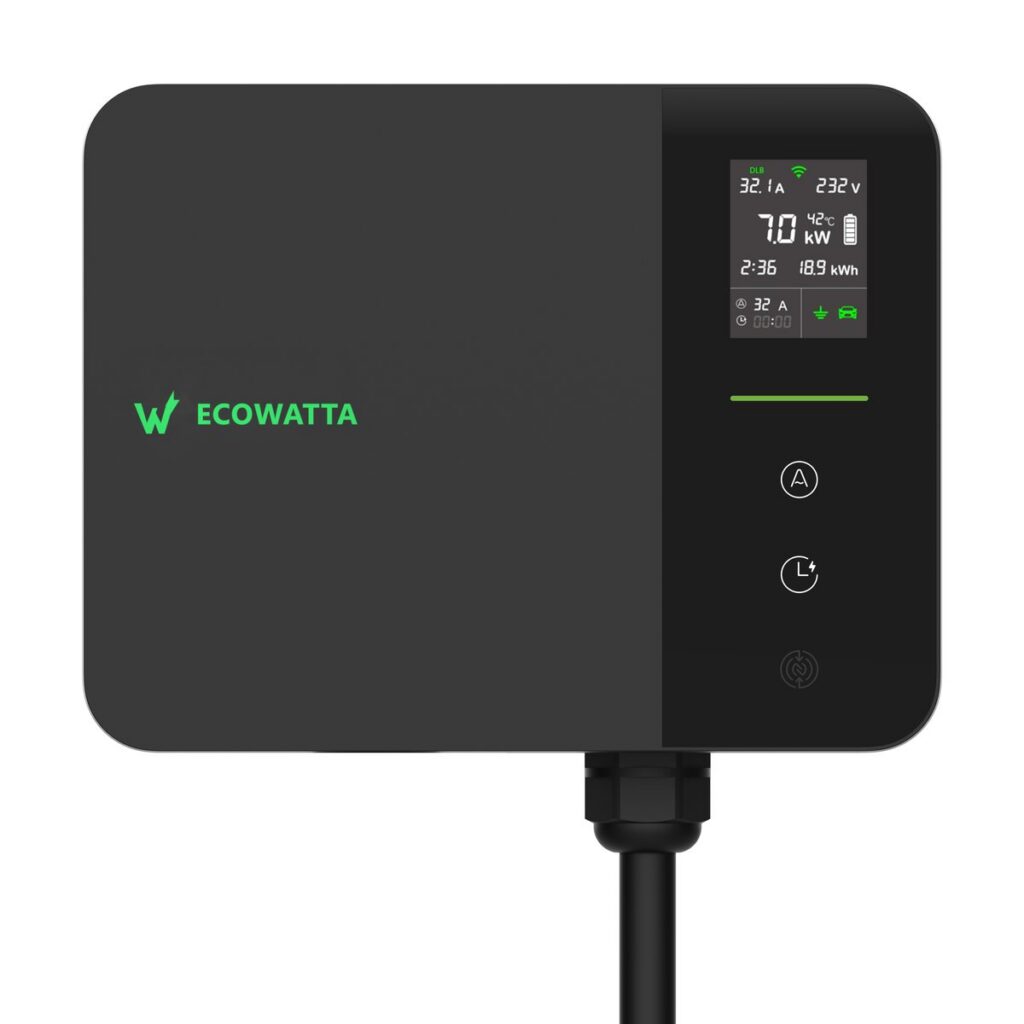
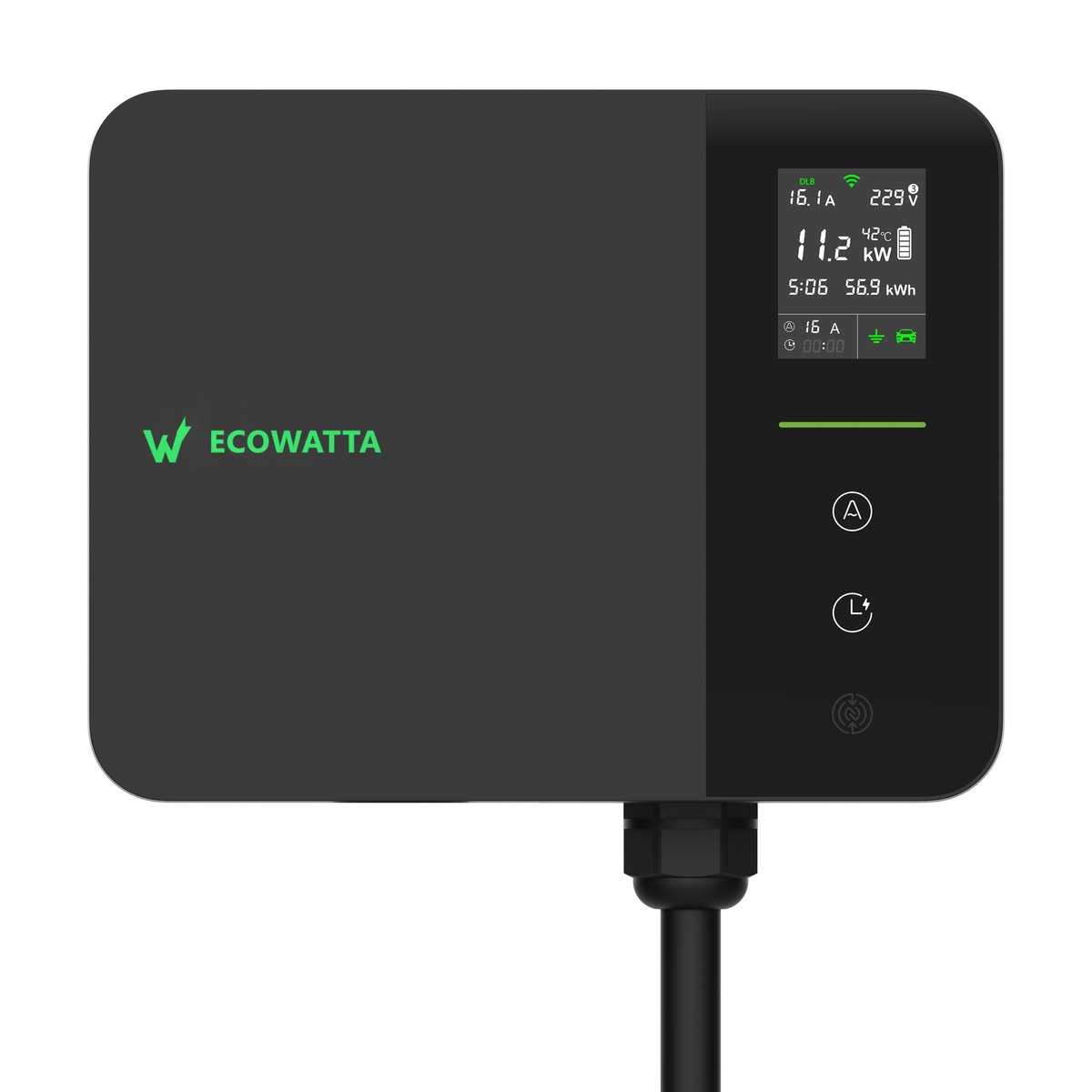
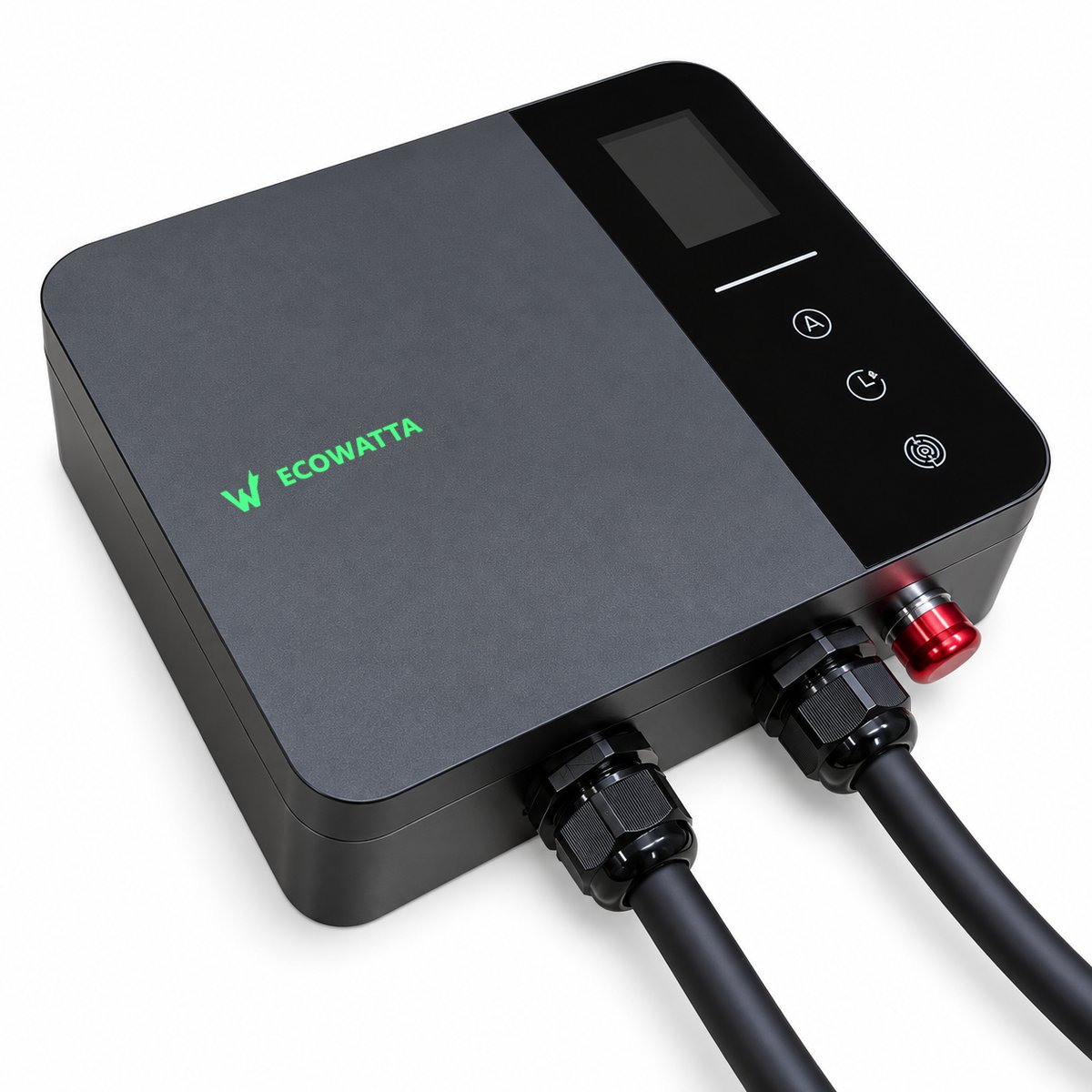
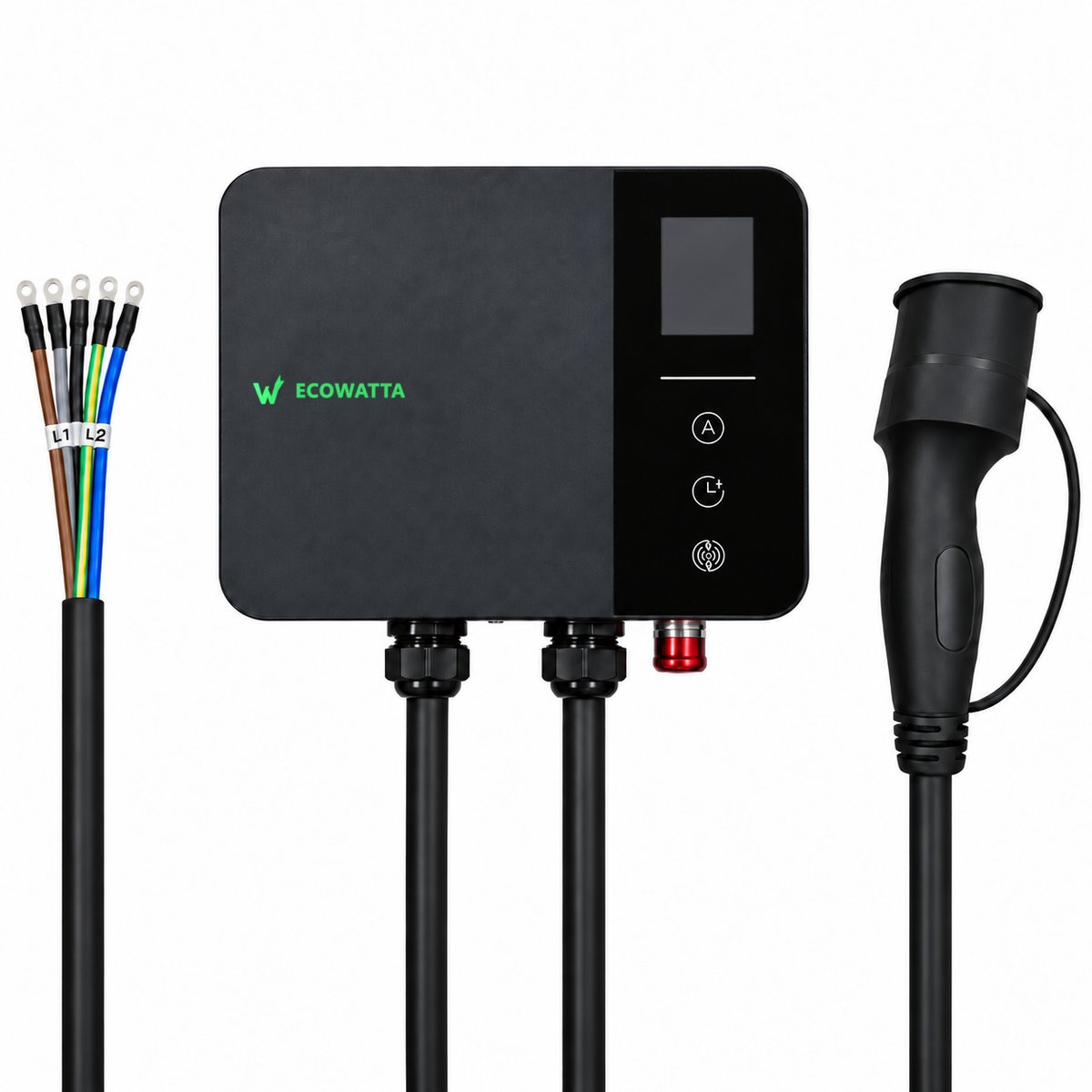
The LCD display shows current, voltage, power, charging time, energy charged (kWh), set current, delay, temperature and the status of Wi-Fi, DLB, earthing and the connection to the car.
- Button A: charging current selection (6 / 8 / 10 / 13 / 16 A); you can also change the current during charging without unplugging the car.
- Button C: delayed start of charging.
- During charging only long presses work, so you do not interrupt charging by accident; emergency stop button.
- Status LED: blue – ready, moving green – charging, red – fault.
NFC cards
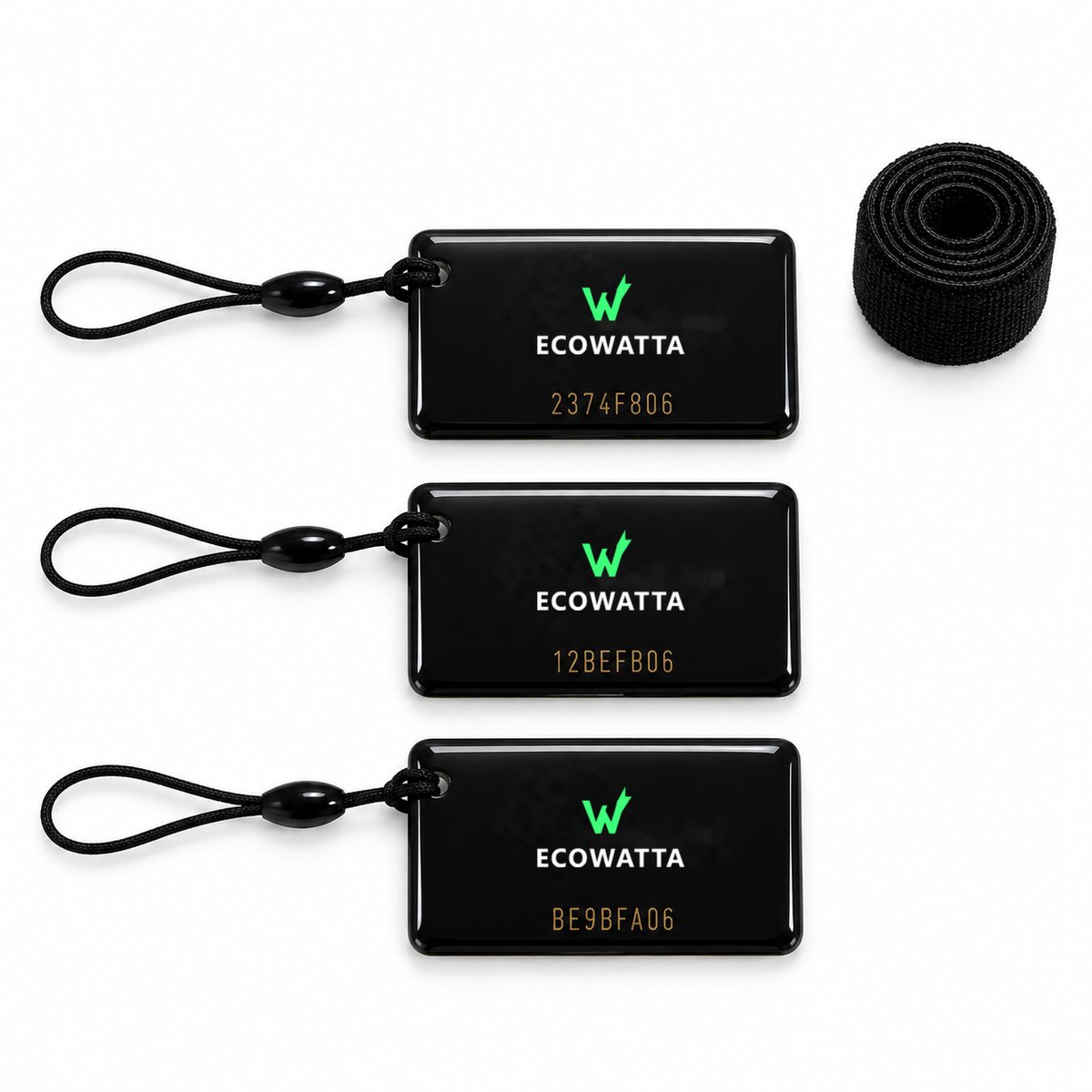
When you enable NFC card authorisation, the charger only charges after the card is tapped — suitable for a shared garage or yard. Charging can also be authorised in the app.
Safety
- Self-test at every power-on: earthing, relay, residual current protection.
- Residual current protection AC 30 mA, DC 6 mA.
- Protection against undervoltage (< 80 V) and overvoltage (> 270 V) and overcurrent.
- If the control unit overheats (80 °C), charging is temporarily paused and resumes at a lower current.
- Warnings on the display and in the app, history of safety events with export.
Load balancing (optional: DLB-A1 controller)
The DLB-A1 controller in the distribution board, with three current transformers, measures the consumption of the whole house and continuously allocates the charger as much current as is available — the main fuses do not trip.
- Balances 1 to 3 chargers; connection wirelessly at 433 MHz or by RS485 cable.
- When less than 6 A is available, charging is temporarily paused and resumes automatically; response time under 1 second.
- The charger must have the DLB antenna fitted.
Certificates
The charger has been tested by TÜV Rheinland: safety to EN IEC 61851-1 (TÜV Mark, CB certificate), radio equipment under the RED Directive 2014/53/EU and electromagnetic compatibility (EMC).
Installation
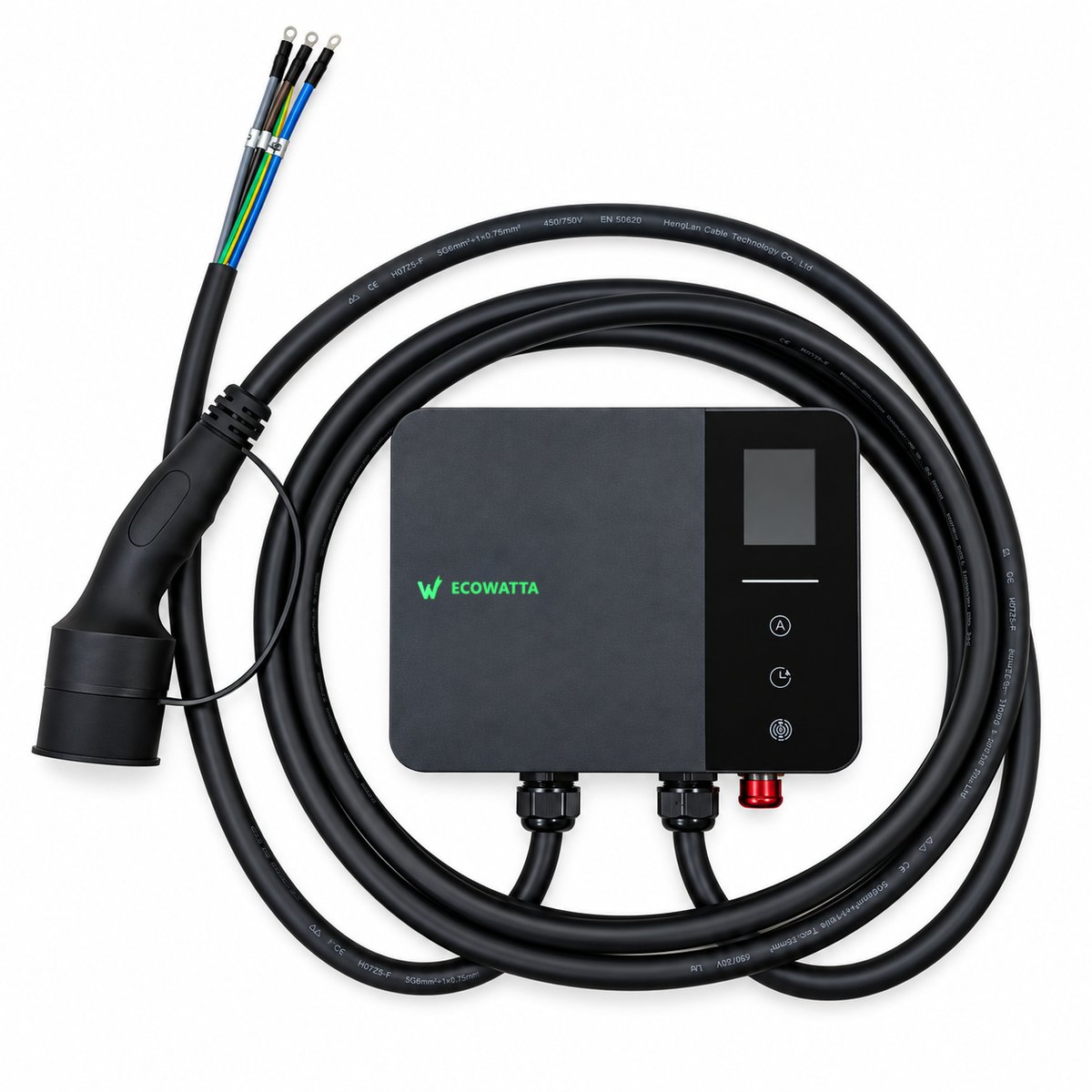
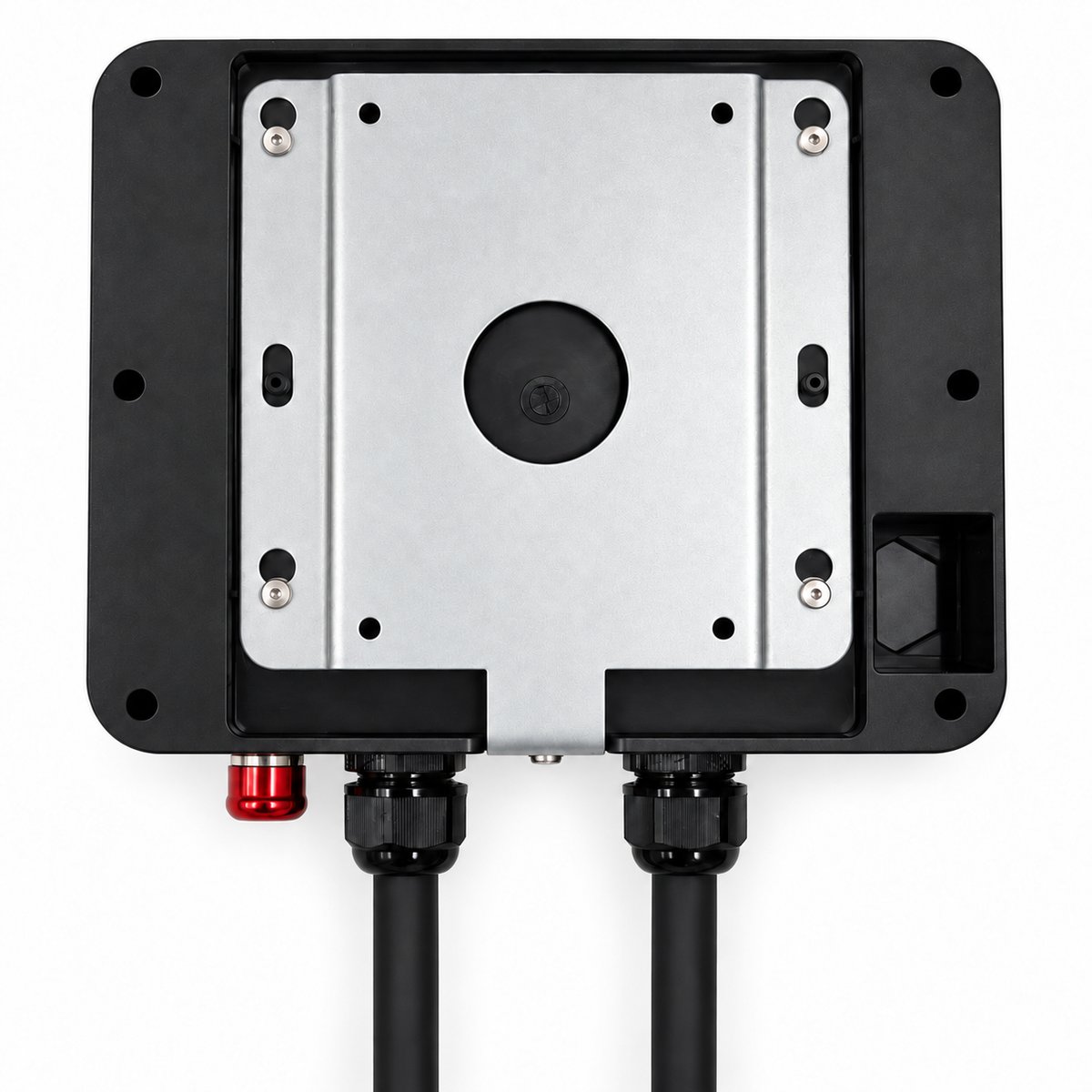
- The charger is connected in the distribution board; the connection must be made by a qualified electrician in line with applicable regulations (e.g. IEC 60364-7-722).
- On its own circuit: type A 30 mA residual current device and a 20 A circuit breaker.
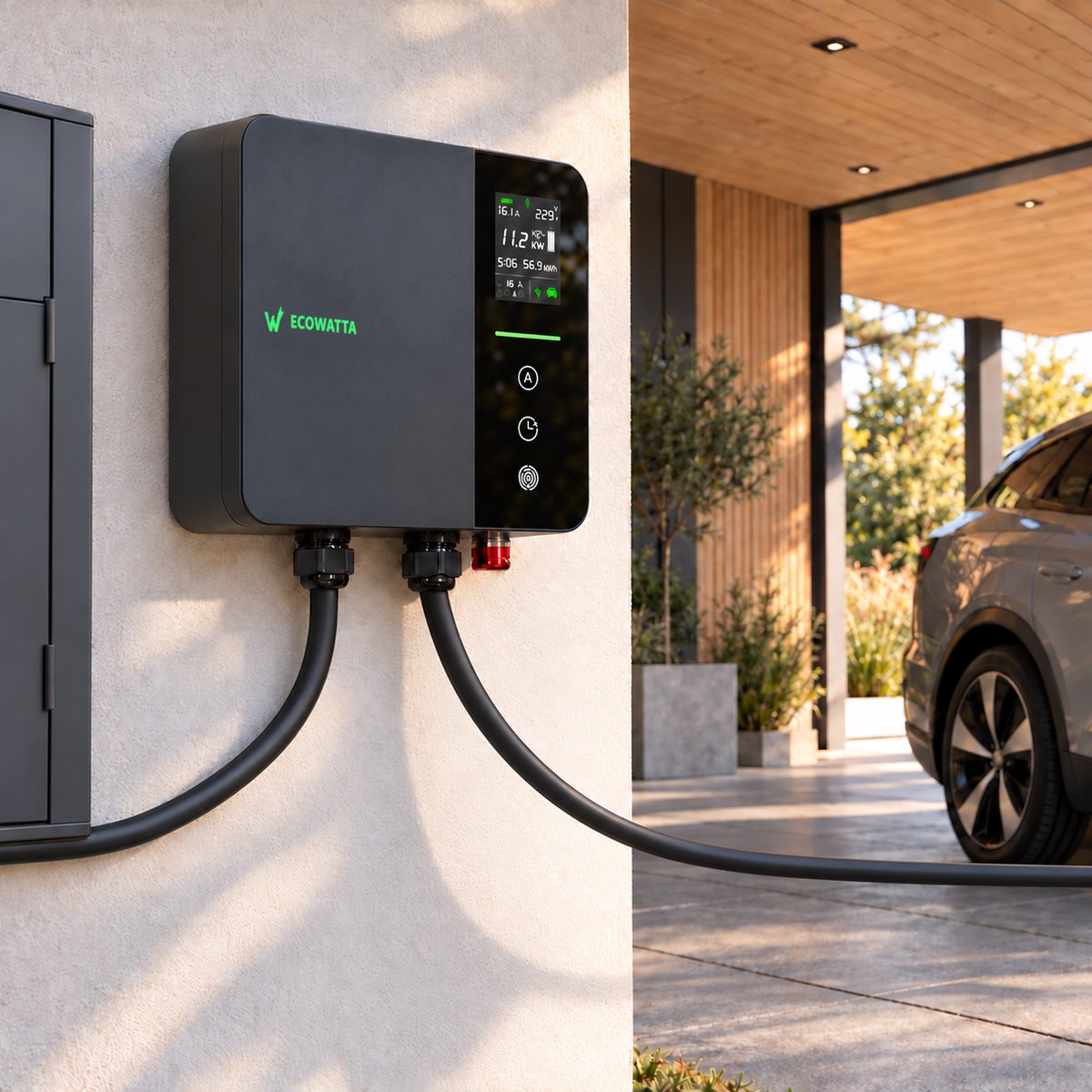
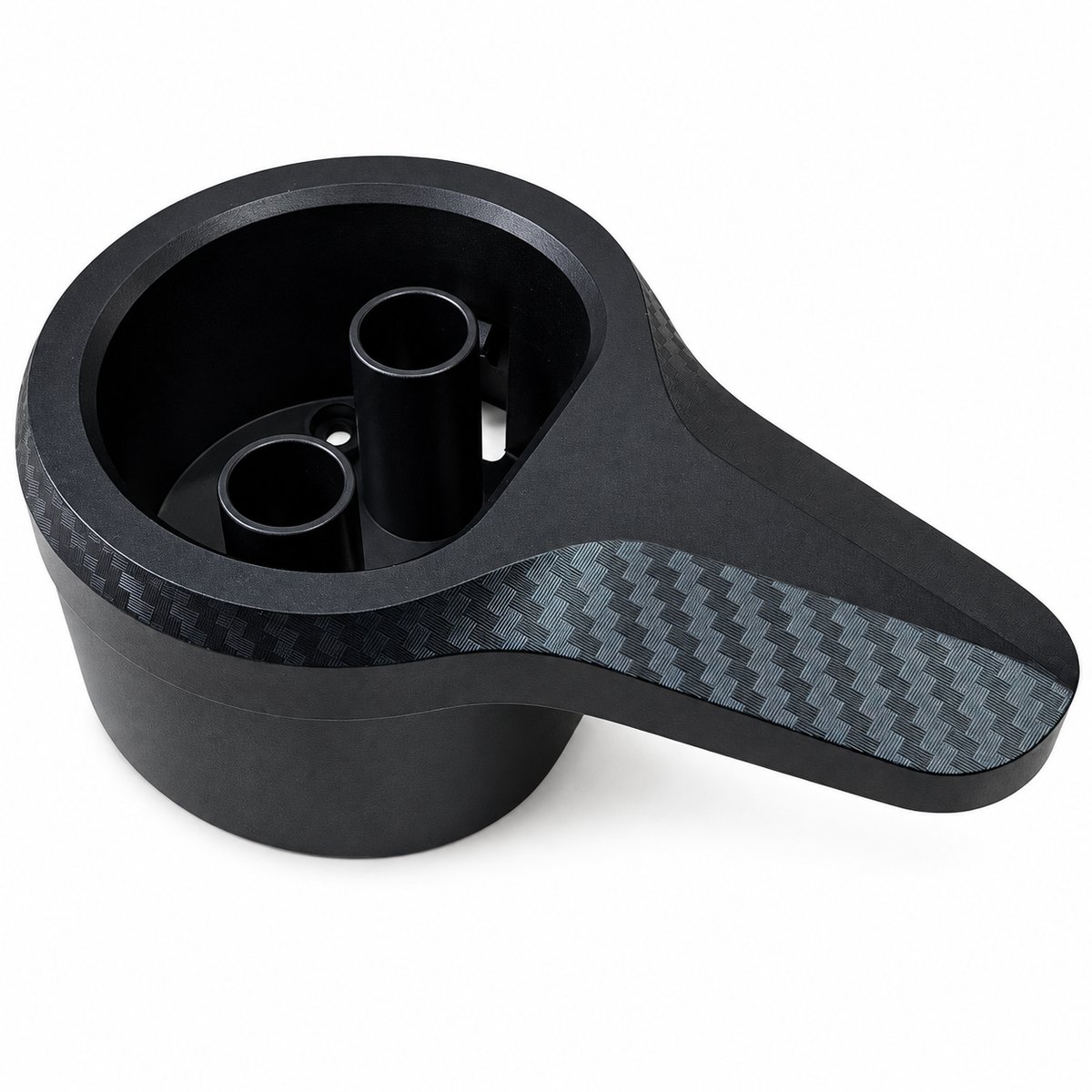
- Charger height 1200–1500 mm, plug holder 500–1500 mm.
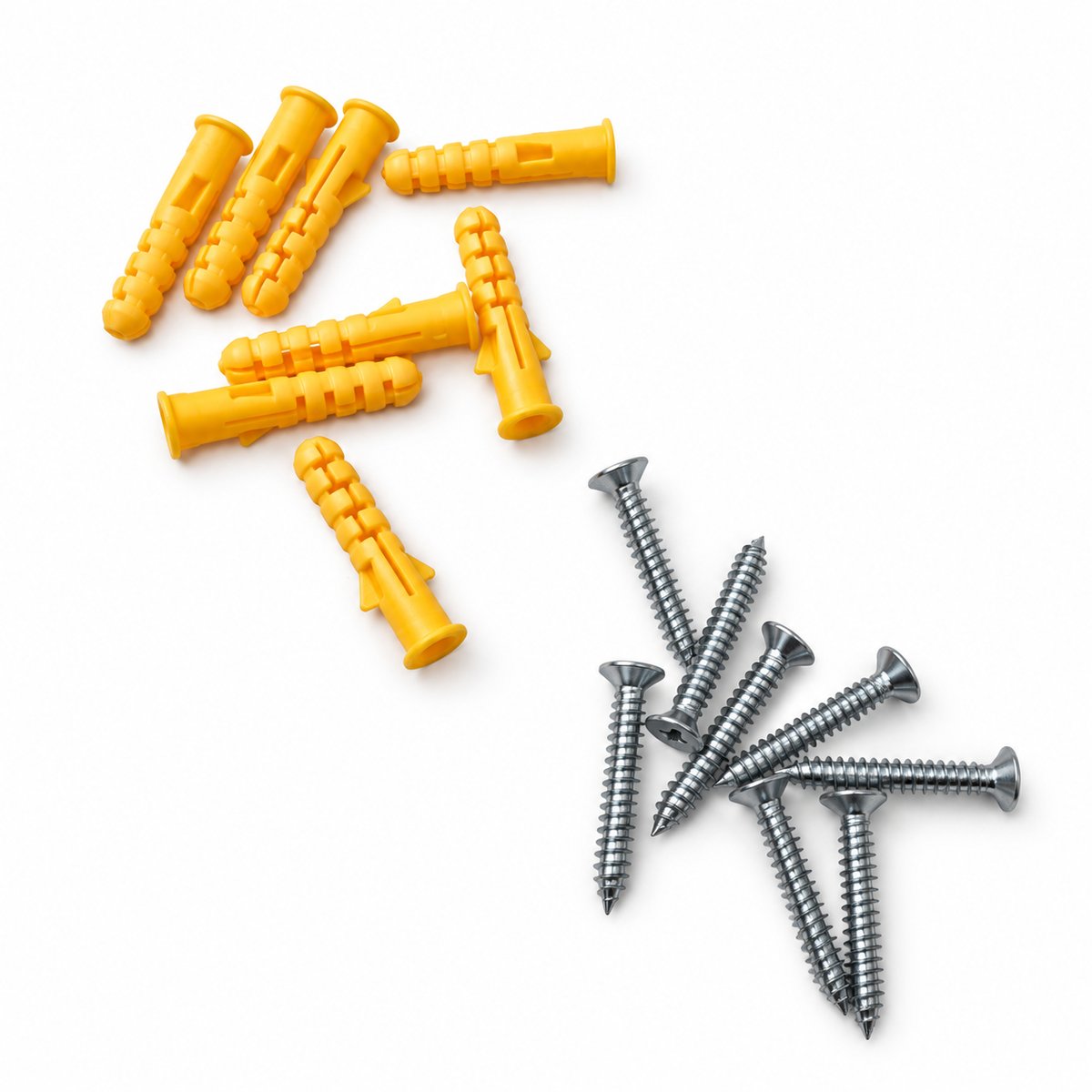
- Mounting on a wall or on a metal post.
- Before installation, check your connection power with the distribution operator.
Frequently asked questions
How do I charge in the cheapest time block? In the app you enter the tariff plan, place windows in the cheaper blocks in the smart schedule and select the current for each window. Set the charging mode to “Scheduled”.
Do I need internet? For the app, schedule and statistics, yes (Wi-Fi 2.4 GHz). Without a connection the charger works with the buttons: current, delayed start, NFC.
Will the main fuses trip when I cook and charge? Not with the additional DLB-A1 controller — the charger automatically reduces the current.
Can I get a subsidy? Borzen: 55% of eligible costs, up to €1,000 per charging point for private individuals; it must be installed by a company registered in Slovenia.